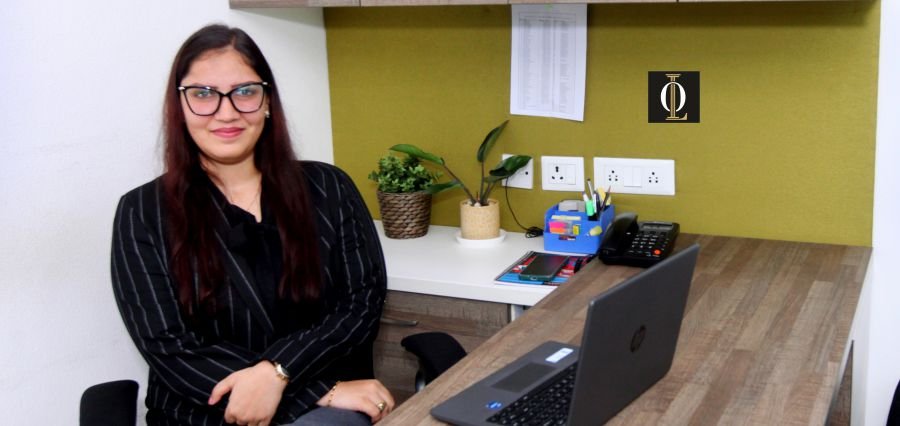
As you are constantly influenced by the changing times, you, too, with your vision and far-sightedness, possess the power to influence and change the times to shape a future you dreamed of, believes Sneha Sharma, Partner, Head of Department – Patents & Designs at the Sujata Chaudhri IP Attorneys (SCIP).
With a robust foundation in both law and technology, Sneha brings a sharp, future-facing approach to intellectual property rights—especially in the ever-evolving patent landscape. Her experience spans litigation, prosecution, and transactions, equipping her to manage diverse client portfolios with agility and precision.
Her technical background has proven instrumental in decoding complex patent and technology law matters, while her passion for staying updated on legal developments empowers her to navigate novel queries with confidence.
In an exclusive interview with Legal Today, Sneha shares insights into how adaptability, strategic thinking, and client-centric innovation define her journey as a trusted IP attorney.
With more than a decade long experience in the field of IP laws, could you take us back to the beginning of your journey? What motivated you to step into this field?
My journey began with a deep interest in the intersection of science and law. My engineering background gave me an analytical and problem-solving approach and ignited in me a deep fascination for technology and innovations. On the other hand, for as long as I can remember, the logical and arguable perspectives that law brings were always intrinsic in me. So, when I learnt about Intellectual Property Rights in an academic symposium, I knew I had found the path I would like to take up professionally. Curiously, I then learnt of LLB with IP specialization being offered by IIT Kharagpur, only to engineers and master’s in sciences. I enrolled in the course in 2011 and thus began my tryst with IP laws.
Through learnings in college, internships, and seminars, I understood that ours would be the generation of technological breakthroughs and newer businesses, especially in the digital space, which would see a great boost in years to come. Protecting these breakthroughs and creations proprietary to businesses, safeguarding them, and enforcing the rights secured therein would not only become a necessity but would also be an ever-evolving landscape. This is how I wholeheartedly dived into IP laws.
Over my decade-long career, while my technology background has tilted me more towards patents, designs, trade secrets, plant variety’s protection and the more technical kinds of IPs, it has not allowed my interest or fascination with other kinds of IPs (trademarks, copyrights, GIs, trade secrets) and allied laws (TMT, IT laws, privacy and data protection) to fade away. Apart from prosecuting patent, trademark and design applications in India, I have had some experience in IP litigation and transactions as well. As for advisory, I keep myself in a learner’s mode to expand the scope of IP advisory and include technology laws and other allied areas, helping provide a bird’s eye perspective in each unique fact situation.
Recently, I joined Sujata Chaudhri IP Attorneys (SCIP) as their Patents & Designs – Practice Head in September 2024, wherein I hope to leverage my humble experience in building their practice. This association reflects my belief in continuously looking for challenging opportunities for growth of self and of those I associate with – colleagues, firm and clients.
What is the driving force or central philosophy behind your continued growth and success?
The central philosophy behind my growth is a commitment to excellence each day, with each query and for each action. I firmly believe that there is no secret sauce for growth or success –keep doing your best work today, tomorrow and every day thereafter!
Other aspects that help in one’s growth are – having a learner’s mindset, adaptability to changing working situations, businesses and issues concerning them, and, most importantly, having a non-self-limiting attitude.
The dynamic nature of both technology and law, more so IP laws, demands one to keep re-inventing oneself, updating one’s knowledge repository and understanding how one can apply all of that to the client’s business, for their growth, and in their best interests.
I firmly believe that by consciously attempting to not limit myself in terms of the areas of law I apprise myself with, a wider perspective presents itself in my advisory to clients. I believe to as-sist a client means to understand their unique circumstances, business model, competitor space and a hundred other things before one can tailor a solution and offer alternatives, with risk assessment and safeguards for the latter.
Ultimately, when you strive for the client’s growth and success and are constantly evolving in the process, you invariably grow.
Could you shed light on your approach to leadership, team building and client satisfaction?
Leadership, to me, is about fostering an environment of trust, collaboration, and continuous learning. I believe in empowering my team, encouraging them to take ownership of their roles while providing guidance when needed. I like to keep a democratic environment wherein I encourage views, opinions and recommendations irrespective of experience or designation.
For client satisfaction, my approach is simple — understand their unique needs, offer clear and practical solutions, and ensure bringing a 360-degree perspective for a given problem or requirement at hand. In addition, I ensure there is open communication throughout the process – from strategy to execution.
In an industry where innovation is crucial, how does your firm navigate the delicate balance between pushing legal boundaries and meeting client demands?
Innovation in law requires a careful balance of creativity and compliance. At our firm, we prioritize understanding the client’s business goals and then crafting strategies that push boundaries responsibly. Whether it’s exploring novel arguments in prosecution or litigation matters or advising on emerging areas like artificial intelligence and online gaming, we ensure that our legal solutions are forward-looking yet grounded in solid legal principles.
As a firm, we pride ourselves in oscillating between being innovative while acting in the client’s defence and cautious when strategizing on the client’s next action/s.
Sustainability and environmental responsibility are crucial aspects of the modern era. How do you promote these principles into legal and administrative parlance?
As a firm, we strive to adopt several eco-friendly practices and initiatives in our day-to-day operations. Practices like complimentary cab service with car-pooling for team members, home-cooked meals, snacks and beverages in office premises to avoid unhealthy food habits, and the use of as few paper printouts as possible, which are thereafter recycled for various initiatives are some instances of sustainable and environmentally conscious approaches, we take on an everyday basis.
We also conduct drives from time to time, such as each member planting a tree and caring for it, the firm helping shelter homes with supplies to care for stray animals during winter months and other initiatives.
How do you envision the role of technology in the Indian legal system, particularly in areas such as case prediction, legal research and potentially even judicial decision-making?
Technology has the potential to revolutionize the Indian legal system, and it is well on its way to doing so. Tools based on AI and machine learning have been able to streamline legal research, docketing, and administrative tasks to a great extent. They have also started assisting in aspects of judicial decision-making. In my view, while exercising necessary caution, the lawyers’ fraternity has been fairly optimistic in adapting to and implementing the technological tools as we now see several leading firms creating, collaborating on and/or integrating trusted AI-tools into their daily working leveraging the many benefits that technology is capable of offering.
In IP law practice, technology has now enabled the fraternity to conduct efficient IP analytics such as patent prior art searches, invalidity assessments, infringement analysis and freedom to operate clearance searches, trademark/ design/ copyright clearance searches and so on. Certain tools are now capable of rendering initial drafts for briefs, opinions, submissions based on the format fed as precedent/ reference to the tool and incorporating the fact situation input as query. Additionally, IP portfolio management tools have helped with docketing, reminders, and other administrative automation where templated responses could suffice – now crucial to IP prosecution processes. Tools that apprise the professionals on litigation matters, cause-list reminders, skims through voluminous documents to find relevant disclosures etc., are also gaining popularity amongst litigators.
Our firm, SCIP, relies on several of these tools to render high-quality and efficient services to our clients.
Every successful lawyer has their own stories of triumph over adversity. Please share how you’ve tackled and overcome major obstacles.
While there are innumerable instances of high-stakes and complex matters where solutions were arrived at with a calm mind, playing on the teams’ strengths and delivering results within constrained timelines, I consider my success in being able to ‘integrate’ work and life. I consider “work and life balance” as a mental block since it somehow connotes that “work” is distinct and separate from “life” and that they are both on other ends of the spectrum. I disagree with this concept. Just like we integrate healthy habits to enrich our lives, spend time with family and self, as much as may be possible on a given day, and find time to – say – travel, we integrate our life with work we are passionate about. Work, just like other aspects, enhances our lives and makes them more purposeful. It goes without saying that just like some days you would not want to work out but do it anyway, there may be days when you may have to bend over backwards for a client, but that’s how life is! This pitting of work against life mindset has been one of the key obstacles that I have tackled over the years, and it has helped me become more growth-oriented, centered at work and more present and involved at leisure/home.
What specific initiatives is your firm undertaking to improve diversity and inclusion at all levels, particularly in leadership positions?
Diversity and inclusion are core to our firm’s values. We actively encourage diverse hiring practices, provide mentorship opportunities, and ensure that individuals from varied backgrounds have a platform to grow and succeed. Leadership opportunities are based on merit and capability, and we’re proud to see a growing number of women and professionals from diverse fields shaping our practice areas.
What advice would you give to young law aspirants entering the profession today?
To young law aspirants, I would say: Stay curious and be committed to life-long learning. The legal profession demands perseverance, adaptability, a passion for problem-solving and consistency in updating one’s knowledge repository. One can go far and beyond in this profession by building strong fundamentals, seeking mentors in fields of interest, and learning from every mistake. Another piece of advice – don’t hesitate to explore newer, interdisciplinary areas like IP and technology laws. Since these laws are still in their nascent stages and continue to develop with changing times, the opportunities for growth are immense.
Approach every challenge as an opportunity to grow, and you are sure to enjoy the journey.